
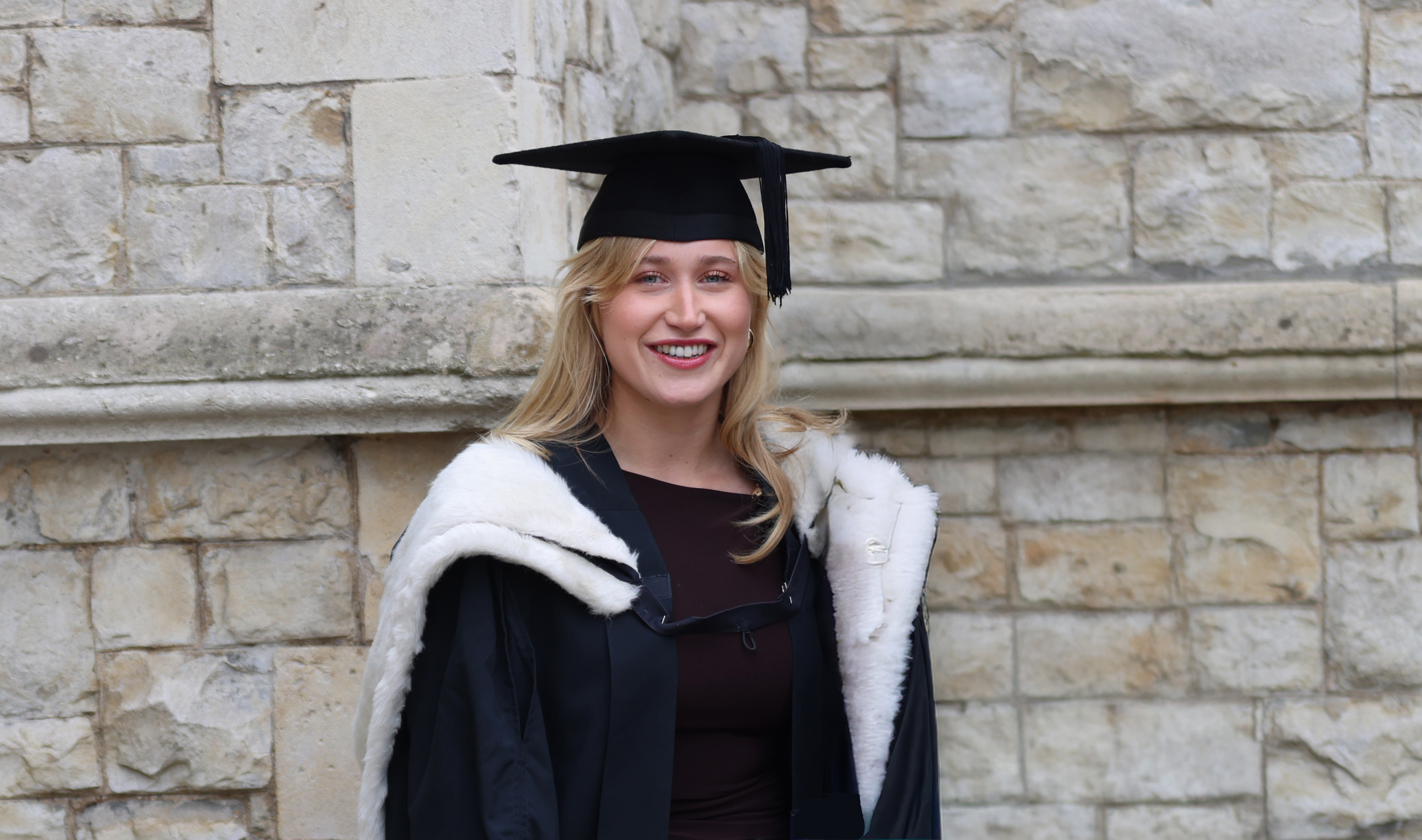
When did you study at St Mellitus College and what programme were you in?
I studied with St Mellitus, beginning in 2021, on the BA in Theology, Ministry and Mission with Durham. I actually took a year out about nine months into that first year, and then I picked it back up again in April 2022 and finished last year.
What are you doing now, vocationally?
Currently I work for a humanitarian aid NGO, based out of the US, called Operation Blessing. I’m a logistical preparedness technician, which means I get deployed in disaster zones, and I help with logistics on the ground. When I'm in the UK, I help raise awareness and create partnerships between Operation Blessing and other churches and organisations. I am back and forth a lot between the US and the UK. I've been at home now for over a month, which is probably the longest time I've been here. I spent February in Jamaica, after the hurricane out there, and again in November, and then before that was Israel and Ukraine - so lots of different places.
Looking back at your time at St Mellitus, what resonates with you most, how would you describe your time at the college, or what stuck out to you the most as you studied there?
It was really challenging, actually, because I came from quite a conservative Christian background, and so I was kind of breaking off and unlearning some old theology. I wanted a non-biased opinion. I had my home life; I had the church I was attending. And then I thought, do you know what, I need someone who doesn’t know me, doesn’t know my context, and doesn’t want to influence me to think a certain way.
So, what impacted me was having so many tutors with different ideas, who proposed ideas they didn’t necessarily think were the right way, but offered them as a way of thinking things through — or showed how a liberal Christian might think it through, or what Black theology would say. It was really interesting. I hated the fact that there wasn’t a right answer, but it was also nice to realise that this takes the pressure off somewhat. I thought I would solve all my questions in my three years at St Mellitus. Funnily enough, I didn’t.
With this idea of generous orthodoxy, I think, in some ways, it scared me when I realised how much of a change it was from my normal, because I kind of believed I’d already thought it all through. And then I came and I was like, oh no, I think all their questions are wrong, I think all their teaching is wrong. Obviously, I know best. This is too uncomfortable; it doesn’t fit with anything I’ve been taught. But, I pushed through that honestly through tears and Scripture. I mean, even this past week, I’ve had this kind of revelation of: you have this idea of how you think, and you think, oh, I’m right, because this is what the Church thinks, this is what wise people in my life say — and they are wise. And then you look at Scripture, and you think, you may be wise, and it may be good advice, but it’s not actually Scriptural.
So I love that the college always brought it back to Scripture and allowed you to form your own opinions, rather than conform to a culture or a denomination.
Doing the BA studying theology, how do you see that shaping how you lead and work in the context that you're in now?
So, I’m the only Brit on a team with eleven different nationalities, and it’s a faith-based organisation, so I bring a very different worldview into the team — and I’m met with very different worldviews as well.
I think it’s been so helpful to have this foundation of: you don’t have to be right, and they don’t have to be right, and it can still be God. It can be different people with different backgrounds, and, you know, we’re all just trying to figure it out. God can’t be boxed, regardless of where you are in the world. So, yeah, it is definitely humbling.
During college, I also wrote a lot. I loved the mission sections that we studied. And I thought, I’d dabbled in this work; I’d worked in Ukraine when the war first started there, and then I’d finished — that’s why I deferred my degree, to go volunteering on the border — and then I came back. I thought, I kind of get this. I get mission. I get how theology fits in with being hands and feet. Yeah, and the more you do it, the more you’re hit by how much more there is to learn about God, and that you’re just never going to get it — in the best way.
Why would you encourage someone to study theology?
I think it gives you a good grounding for how to navigate faith problems, because they’re going to come — you’re going to have those big questions. And I had three or four years of tutors, and amazing, amazing men and women of faith who had studied it, to bounce them off.
At teaching week, I’d have a meltdown about, I don’t know, some women in ministry thing that was rooted in my childhood church culture, and I couldn’t get over it. And I remember one of the tutors... I was asking tricky questions that weren’t really necessary, and it was coming from a place of not being helpful. It wasn’t necessarily to learn the truth.
Anyway, he took me aside and said, “What’s going on? Let’s talk.” And it was great. In that moment, it was being able to talk through faith problems that you have, or theological issues, with someone who’s not in your context, but wants to see you win and wants to see you flourish. And it equips you for what you’re going on to do, I think.
Can you share a story about how you've been seeing God move in your life since leaving St Mellitus?
It would probably be this past February in Jamaica. So, initially, our deployment was distributing food and water — essentials. The hurricane had just happened, and people needed stuff.
I went back a couple of months later, and it was more stable on the ground. Now we were looking at rebuilding, which is something our organisation doesn’t necessarily do. Typically, we provide water, food, hygiene, and medical support — but not new houses. So this was a whole new thing that the team was dealing with.
And you just see, step after step, God putting the right partnerships in place. Like, oh, now we have a partnership with Home Depot, and they’re providing materials. And then World Vision want to get on board. You see this unity and collaboration of Christians coming together internationally — different nationalities, all for the purpose of: one person needs a house, and we get to build them a house.
And then you get volunteers from YWAM joining, and they want to help build houses. So you’ve got all these people on the ground — they’ve all got their own faith, they’ve all got their own journey — and you just see how God unites everyone, and how he provides all the resources.
And then, at the end, we all get to dedicate this house. You stand around this brand new home that people have built in four days — it’s crazy — and we dedicate the house. And we, as a group of basically strangers, get to dedicate their home, pray over the family, and hand over the keys.
It’s just amazing. It kind of doesn’t feel real when you come home.


