
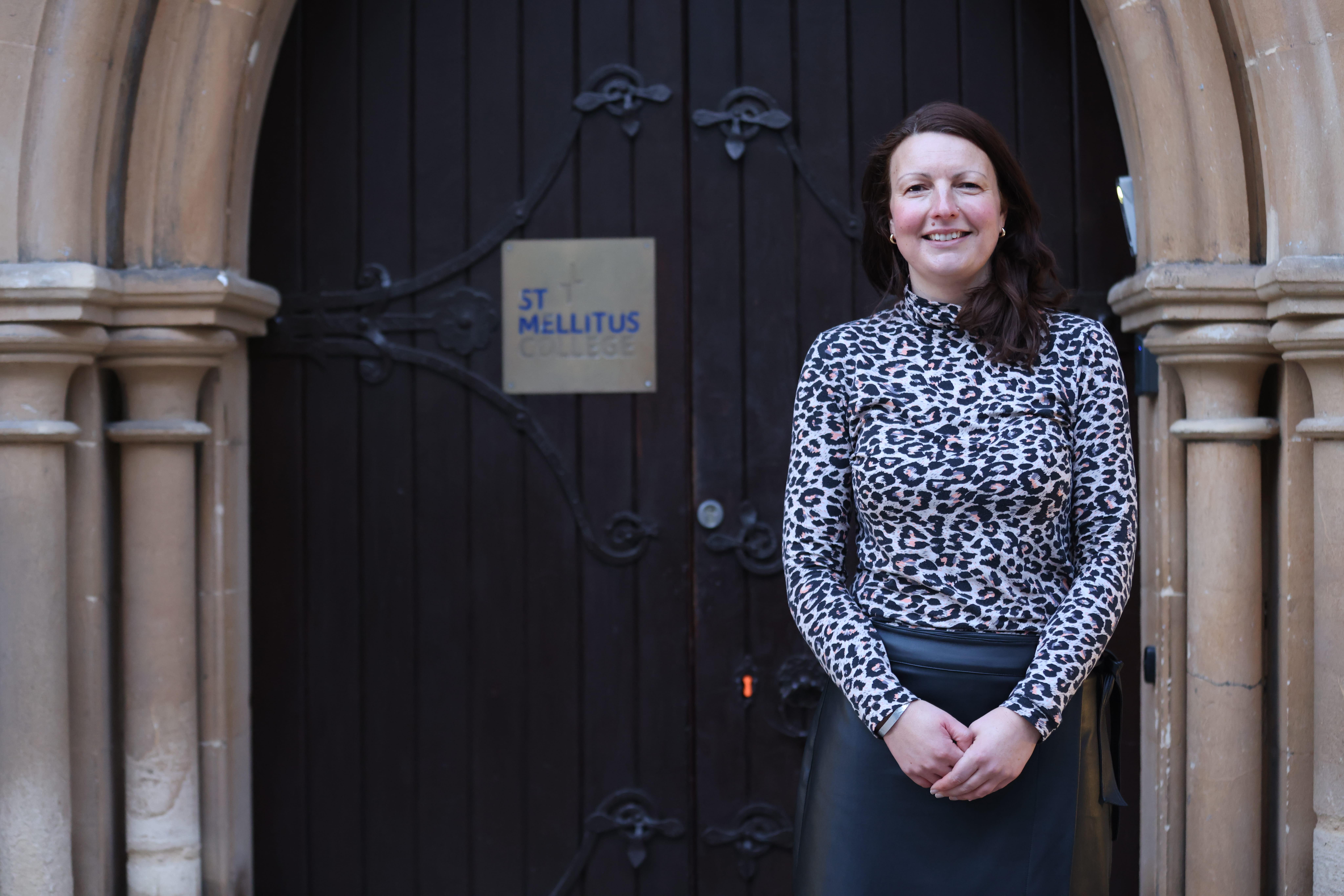
Tell us a bit about yourself?
I grew up in rural Northern Ireland in an area where going to church was just what people did – church was the place for worship but also the hub for socialising and community events. Arriving in Nottingham for university, the contrast was enormous – church didn’t feature at all! I slid into my twenties, still with a faith, but living a lifestyle that was quite some distance from reflecting this. After finishing my law degree, I went on to complete my training as a solicitor before leaving the commercial world and moving into the charity sector. While studying and training I worked as a doctor’s receptionist and waitressed at different points and my learning from those roles has proven far more useful in ministry than any legal knowledge I gained!
Following the end of a relationship I felt a nudge from God to do the Alpha course, which was the start of a new chapter for me. I completed the course and knew I needed to recentre myself on God. I got stuck into church life, serving on pretty much every team going, moving into a flat share with others from my church and rediscovering the beauty of a local community serving God. After a stint as Church Warden, including an interregnum, I heard God again, this time with backing vocals from people in my church, that I should explore ordination. It took time to get my head around this but eventually I ended up at St. Mellitus. I’ve loved that I’ve been able to continue working in my role at Age UK while studying and also learning a huge amount in my placement church.
What first drew you to study at St Mellitus College?
A number of people I know had studied at St Mellitus and all had recommended it, without exception, which prompted me to explore the college. I attended an open evening which was relaxed, warm and friendly (and, after a long day at the office, the lasagne was more than welcome!). The staff were approachable and helpful, taking time to explain how things work at the college and answering questions with honesty and care. I was particularly struck by the student-led evening prayer and how worship is woven into the fabric of the college. The students I spoke to were committed to following God’s calling - willing to be prepared for their future ministry. I left the open evening wanting to join them.
Can you share a moment or experience at St Mellitus that has been particularly meaningful or transformative for you?
In the first year of training, I was asked to cover a service at a neighbouring church who were in vacancy at the time. I hadn’t been to the church before, hadn’t met any of the congregation and didn’t have a clear picture of their regular pattern of worship. I was nervous about doing this, particularly given my early stage in training, but I also knew this was a challenge God was presenting to me. As I led the service, I realised how much I had learnt through lectures, through formation and especially through the opportunities I had had to lead worship in college. Leading evening prayer on a Tuesday before lectures, in a style that isn’t familiar, is intimidating but is also an opportunity to understand more about the different ways in which we can worship. This experience in college provided me with courage and confidence to lead a service in a new context, something I couldn’t have done 12 months before and reiterates the value of academic study combined with context-based experience and formational growth in community.
Theology at St Mellitus is academically demanding. Can you share a moment when you were stretched intellectually - and how that challenge shaped you?
I had attended churches of different denominations, but ahead of studying at St. Mellitus I hadn’t appreciated the theology underpinning the distinctions between the denominations. This was highlighted in a lecture focused on baptism. There were lots of differing views from students in the room and healthy debate, including issues that hadn’t crossed my mind beforehand. In hindsight, I can see that I hadn’t paid enough attention to the liturgy in baptism services I’d been part of. I learnt a lot about baptism in this lecture, both from the teaching and from discussion with other students. This prompted me to read around the subject so I felt more confident to answer questions that might arise in future. However, my learning from this lecture was far wider, showing me the need to have a theological understanding of what was happening in services, particularly the sacramental aspects. I felt encouraged to be more observant in and reflective of worship services, especially in traditions and contexts I am less familiar with. I expect learning to be an ongoing process and know I will never have all the answers, but my time at St. Mellitus is equipping me, giving me a foundation that I can build on in the future.
Can you tell us about the formation side of studying at St Mellitus College?
At the open evening I attended I asked for an explanation of how formation works alongside academic study at St. Mellitus and was encouraged to hear how central formation is to students’ learning. As part-time students our formation group doesn’t have a huge amount of time together on a weekly basis, but we make the most of the time we have! The conversations over dinner are an important place to debrief on how our week has gone, often reflecting back on services the previous Sunday or the essays we’ve been working on. Likewise at residentials we regularly chat late into the evening as we offer support, encouragement and challenge to one another. I’ve learnt a lot from the students in my group, gaining knowledge of different traditions, hearing about challenges within teams and pastoral situations, understanding contrasting theological perspectives and walking alongside one another through life changes. I know that we will remain an important source of wisdom and support for each other as we move into curacy and am grateful for this legacy St. Mellitus has gifted to each one of us.
Why does theological study matter beyond the walls of a college or church—and how has your time here shaped the way you engage the world?
Theology has helped me to have a better understanding of who God is and how he is at work in and around me - studying has been incredibly important in deepening my own faith and shaping my view of the world. Undertaking training for ordination while working in a secular role has emphasised the role of theology in the everyday, in the decisions I make and those made by others, how I approach my role in the communities I am part of and how I interact with the people around me. This came to the fore particularly in the Ethics module when we thought about some of the big issues we face today including money, conflict and death – connecting theological debate with the realities of the world we live in.
What tips or advice would you give to someone thinking of studying theology or joining St Mellitus College?
I would say embrace the experience as a whole. The learning straddles the academic, formational and contextual and none of these three is possible without the others. Being able to apply academic learning in context has been invaluable for me in growing my faith and my ministry, but the formational element alongside this is essential. There are lots of opportunities to learn about subjects you may never have come across before, to gain further insight on those you have knowledge of and to challenge where you disagree. I’ve found lecturers to be welcoming of questions, generous with their time and patient in their explanation. Alongside this I’ve been grateful for the input of the academic support staff who are so helpful in their approach. The college offers grace and compassion in moments of struggle and the London Tuesday community as a whole has been a joyful gift to me in this season of training. In short, I would give a five-star review!
In three words, describe your time at St Mellitus College. Why those words?
Authentic – the generous orthodoxy of St. Mellitus allows people to be themselves and enables the building of deep relationships between people who are different from one another in almost every way. I struggle to think of a group of people that brings more diversity than that of our formation group, but we are all able to share our views honestly, knowing that we will be heard and respected, even if we don’t agree. Likewise, college staff are genuine in seeking feedback from students and trying to make things work as well as they can. This authenticity is woven through the life of the college and is particularly evident at college residentials when we all come together, across centres, to worship and learn together.
Challenging – the breadth of academic subjects covered and the rigour with which we are encouraged to engage with them is challenging – in a way that helps to grow faith and wisdom. I hadn’t written an essay for 20 years when I started college and, although they can be difficult, especially when balancing time against other commitments, I have always gained so much from the reading and thinking I have invested. Studying is certainly a challenge and one worth embracing in all its fullness!
Affirming – my interactions with staff, volunteers and other students at St. Mellitus have been affirming and encouraging of the call of Jesus on my life. Students are called to different ministries in different places and communities but we can be confident that the college as a whole will do everything possible to equip us for our future serving Jesus, whatever and wherever that might be.


